

Impact Story: Teresa Scherl Gerdsen
February 16, 2026
Impact Story: Melanie Corwin
February 19, 2026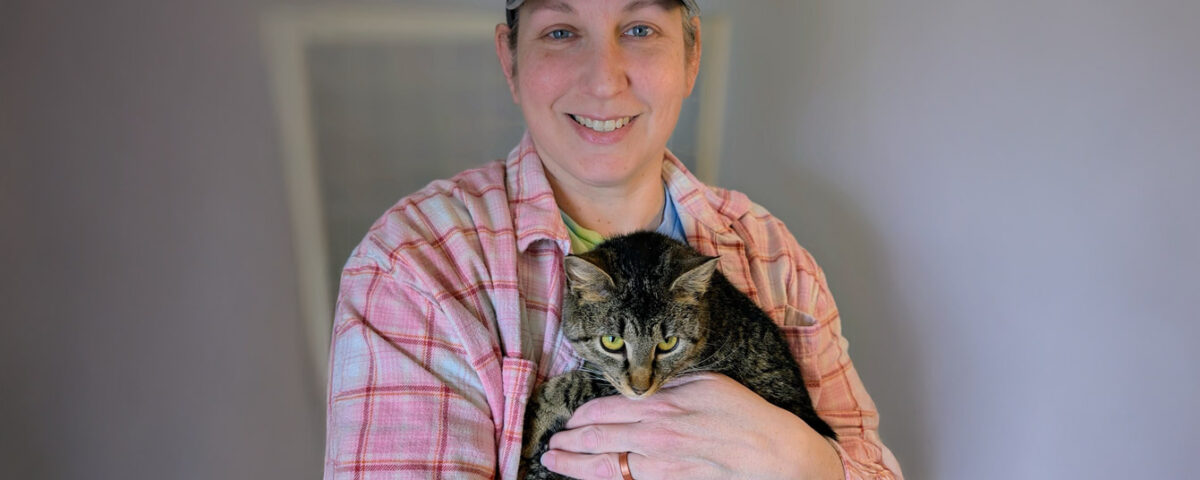
Impact Story: Kelly Anderson
Compassion in Action
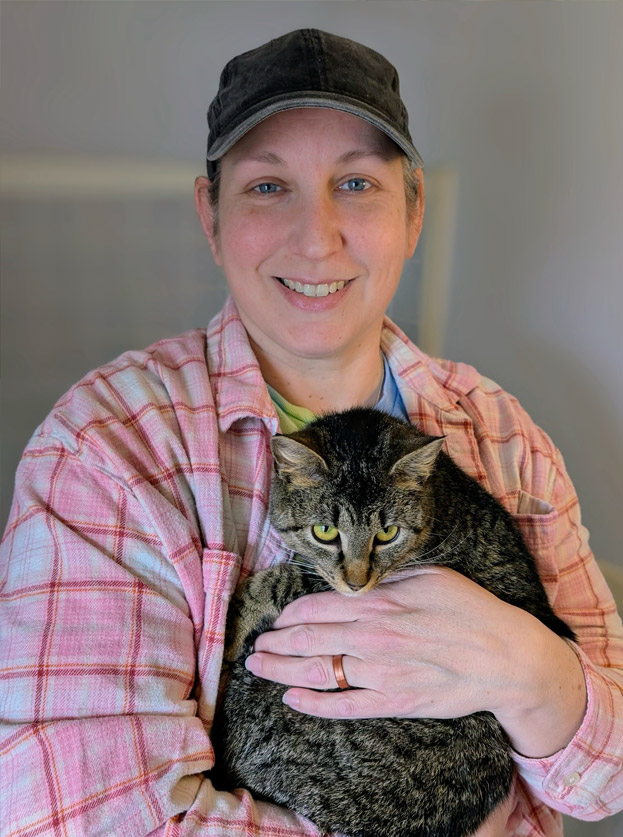
Kelly Anderson saw this coming from an early age.
She grew up in a small house at the end of a quiet cul-de-sac beside railroad tracks — the kind of place people used to abandon unwanted animals. Dark. Remote. Easy-in, easy-out, a perfect dump and run.
One afternoon, while playing near the tracks, Kelly heard faint meows. Following the sound, she discovered a litter of kittens discarded in a cardboard box. She felt a wave of sadness, but didn’t know what to do.
As she turned toward home, the smallest kitten began to follow her. When Kelly stopped, the kitten stopped. When she walked, the kitten walked — trailing her all the way to her front door.
Her grandmother met her on the porch.
“What’s that?” she asked.
After Kelly explained, her grandmother told her to take it back to the tracks.
“Now,” said her grandmother.
Even as a little girl, Kelly knew then and there that she was going to help animals when she grew up. And help she does.
Kelly now volunteers with UCAN’s Trap-Neuter-Return (TNR) program, humanely trapping community cats so they can be spayed or neutered and safely returned to their outdoor homes.
“It’s my obsession,” she says with a smile.
The TNR process is as straightforward as it sounds — volunteers gently lure stray cats into UCAN-supplied humane traps; they bring the cats to UCAN to be neutered or spayed and vaccinated; and then return them to where they were found, healthier and unable to reproduce.
“With more volunteers, real change is possible.”
Why does it matter? Because unaltered cats lead to endless litters of kittens, overwhelming shelters — if the kittens survive long enough to reach one, that is.
Across Cincinnati and Hamilton County, thousands of kittens are born to free-roaming cats each year, especially during “kitten season” from March through October. A single female cat can produce 12–18 kittens annually, yet roughly 75% die or disappear before six months of age due to disease, starvation, or trauma. TNR stops the cycle before it begins.
“There are so many cats out there,” Kelly says. “If we don’t step in, their lives can be short, painful, and often end in shelters. With more volunteers, real change is possible.”
To Kelly, TNR is more than service — it’s an adventure. She describes it like a movie plot: scouting neighborhoods, learning feline routines, setting traps at dawn or dusk, and safely transporting cats to UCAN before returning them to their outdoor home. It’s part detective work, part compassion, and part hope.
Nacho
Just before the first winter snow, Kelly trapped a young cat who had lived outside a Taco Bell since the time it was a kitten, cared for by employees who fed her tacos (Kelly named her “Nacho”). She was friendly, loving—and pregnant. Without intervention, she would have given birth outdoors in freezing temperatures, giving her kittens little chance of survival.
“Every successful catch is a win,” Kelly says. “Every pregnant cat given a better chance is a win. Every litter prevented is a win. ”
For Kelly, spay and neuter isn’t just medical care — it is saving lives.
“The absolute best thing you can do for your animal,” she says, “is to spay or neuter them.”
For her, it’s love in action. Lived out one cat at a time.